If you have looked at East Hampton listings and thought, How can one town include homes at such different price points? you are not alone. East Hampton can feel confusing at first because a cozy older cottage, a classic Colonial, and a waterfront estate may all sit within the same broader market but live in very different pricing lanes. This guide will help you connect common East Hampton home styles with realistic budget expectations, along with a few ownership details that matter once you get serious. Let’s dive in.
Why East Hampton Prices Vary So Much
East Hampton is not a one-price market. As of May 2026, Realtor.com showed 273 homes for sale, a median listing price of $2.8M, and a median days on market figure of 115, while Redfin reported a median sale price of $1.21M for the three months ending April 2026.
Taken together, those numbers suggest a broad spread between asking prices and closing prices. They also reflect a market with many layers, from smaller older homes to high-end estates, rather than one single “typical” East Hampton price.
The town itself adds to that variety. East Hampton describes itself as a 69-square-mile peninsula with 131 miles of coastline, and its official planning materials point to a mix of Colonial, Greek Revival, Victorian, Tudor, Georgian Revival, and modern or post-modern architecture.
East Hampton Home Styles at a Glance
A practical way to think about East Hampton is by style and condition, then narrowing further by location, lot size, and proximity to the water. While no range is a rule, current market snapshots support a tiered framework that can help you shop more confidently.
Cottages and Smaller Vintage Homes
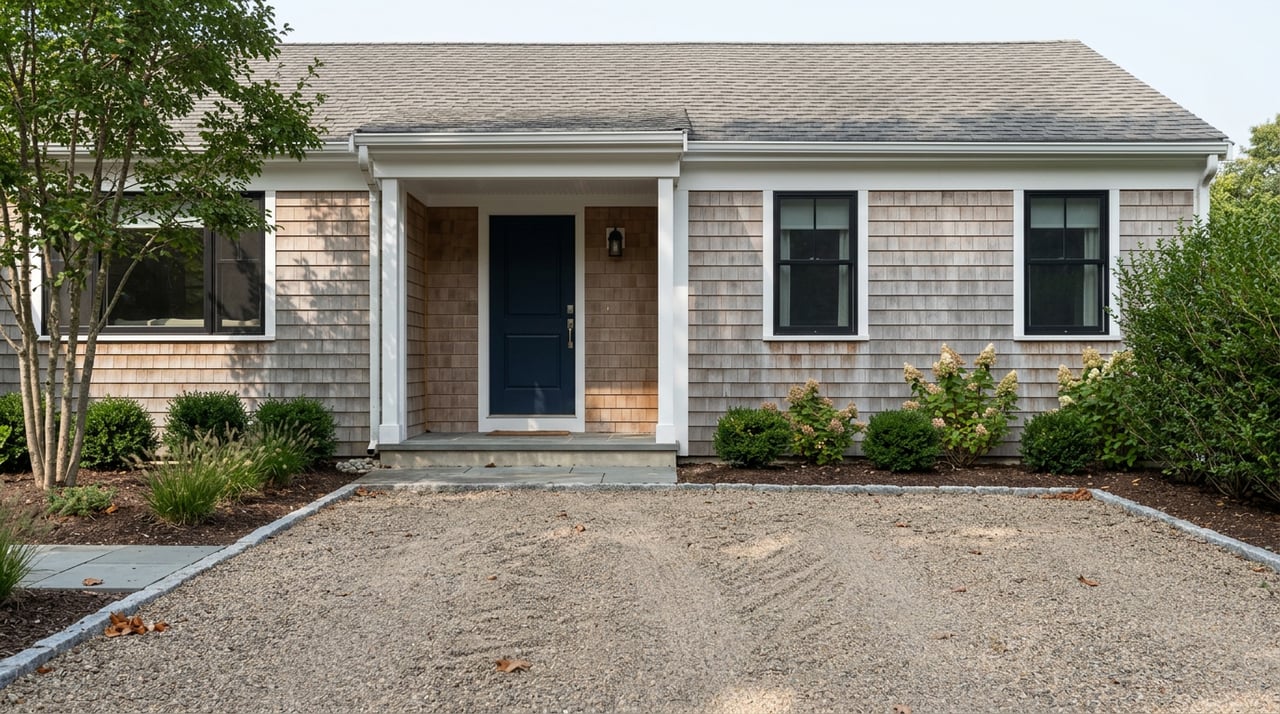
If you are hoping for a lower entry point into East Hampton, cottages and smaller older homes are often where your search starts. Current examples include compact listings in roughly the low- to mid-$1M range, such as homes around $1.395M to $1.575M.
This category often appeals to buyers who value charm, manageable size, or a renovation opportunity. In this segment, price can move quickly based on updates, lot size, and how close the property is to key East Hampton destinations.
Traditional Colonials
Colonial-style homes tend to sit in a more established middle lane of the market. Current examples show a colonial-style home listed at $1.795M, with other traditional listings reaching into the upper $2M range.
For many buyers, this style offers a familiar layout and a more classic East End look. If you are comparing Colonials, the differences in square footage, finish level, and setting can have a major impact on value.
Contemporary and Modern Homes
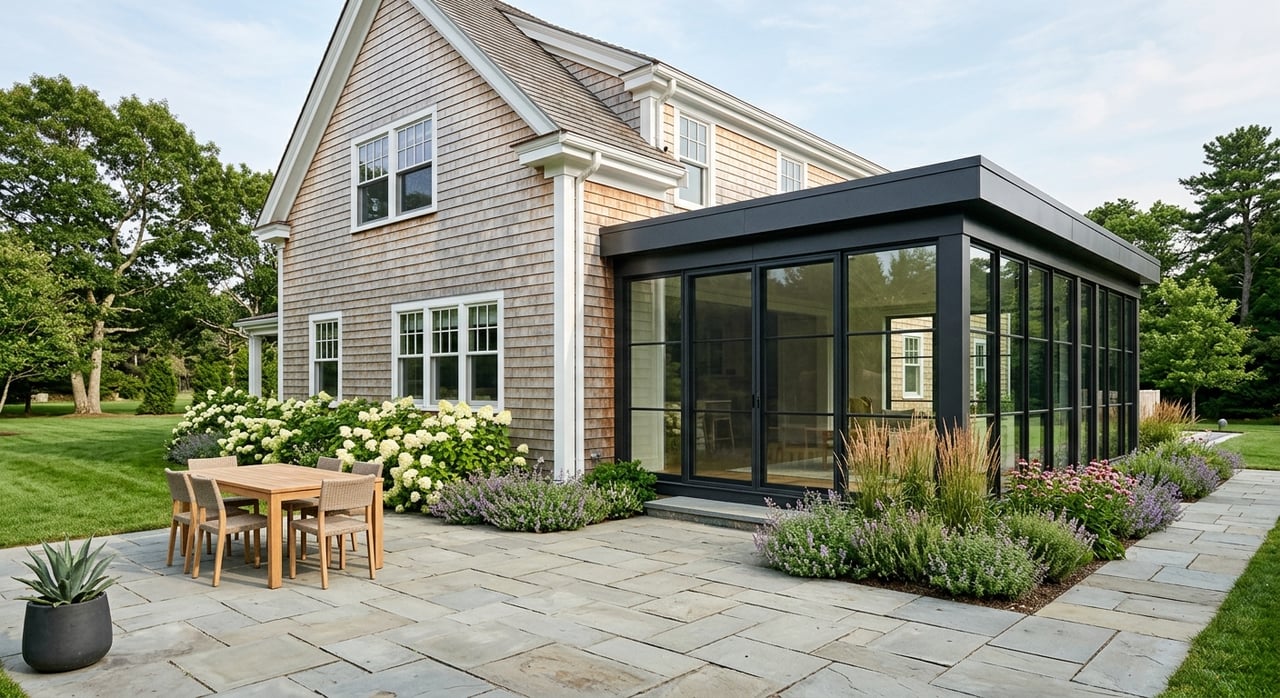
Modern and contemporary homes cover one of the widest price ranges in East Hampton. Current listings include renovated and contemporary homes from about $1.895M to $3.695M, with larger new-construction or waterfront modern homes around $6.15M, $11.5M, and $12M.
That wide spread matters. A modern exterior alone does not tell you the full pricing story, because land, build quality, and water proximity can matter just as much as the architectural style itself.
Shingle-Style and Historic Summer Homes
Some of East Hampton’s most recognizable homes fall into the shingle-style or historic summer-house category. Town planning materials identify Shingle Style waterfront residences as part of East Hampton’s historic fabric, and a renovated shingle-style beach retreat in East Hampton Village recently sold for $7.7M.
In this category, buyers are often paying for more than square footage. Historic character, premium location, and the quality of renovation can all push pricing significantly higher.
Luxury Estates
At the top end, East Hampton reaches far beyond the mid-market range. Current examples include listings at $12M and above, with some asking $19.5M and nearly $30M.
This is why it is important not to think of East Hampton as only a $2M or $3M market. There is a true estate tier here, especially for high-end new construction and prime locations.
A Simple Budget Framework
If you want a quick way to translate listing photos into rough budget expectations, this framework is a useful starting point:
- Lower- to mid-$1M: cottages and smaller older homes
- About $1.7M to $3M: many traditional Colonials and similar mid-market homes
- About $2M to $6M+: contemporary and modern-luxury homes
- $7M+: heritage homes, prime-location properties, and waterfront estates
This is not a pricing formula. It is a practical snapshot based on current market examples, and any individual property may fall above or below these ranges.
What Can Push a Home Higher or Lower
Style matters, but it is only one piece of the value picture. In East Hampton, several other factors can change your budget expectations quickly.
Location and Water Proximity
Because East Hampton is a coastal peninsula with 131 miles of coastline, water access and water views can have a major influence on price. A home with similar size and style may command a very different price if it is closer to the ocean, bay, or other desirable coastal setting.
Condition and Renovation Quality
Two homes with similar architecture can perform very differently in the market if one is fully updated and the other needs major work. This is especially true with cottages, historic homes, and older year-round houses.
Lot Size and Privacy
In higher price bands, the lot often becomes just as important as the house. More land, better siting, and stronger privacy can all support a higher asking price.
Historic Character
In parts of East Hampton, preserved architectural character can add meaningful value. Buyers drawn to shingle-style, Colonial, or other historic properties may be willing to pay more for a home that retains its original feel while offering thoughtful updates.
Ownership Costs to Plan For
Once you move from browsing to budgeting, East Hampton has some ownership details you will want to understand early.
Historic Review for Exterior Changes
East Hampton Town’s Architectural Review Board has authority to review design, scale, style, and compatibility for certain buildings in designated historic districts and agricultural overlay districts. The town identifies historic districts including Springs, Montauk Association, Bluff Road, and Amagansett.
If you are considering an older or well-preserved property, especially in a designated district, exterior changes may involve added review steps. That does not mean you should avoid these homes, but it does mean you should plan carefully before assuming a future remodel will be simple.
Septic and Water Infrastructure
East Hampton says water service is provided by Suffolk County Water Authority, while sewerage is handled by the individual private property owner. The town also notes that many developed parcels still use cesspools or traditional leach fields.
That makes septic due diligence especially important. East Hampton also offers a septic improvement incentive program with reimbursement of up to $20,000 in the Water Protection District or $15,000 elsewhere, which can be a meaningful budgeting detail for some buyers.
Storm Exposure and Insurance Planning
Because East Hampton is coastal, elevation and storm exposure matter. The town provides hurricane storm-surge zone information, which is especially relevant if you are considering waterfront, bayfront, or lower-lying property.
When comparing homes, it helps to look beyond the purchase price and think about the total ownership picture. Insurance costs and property-specific exposure can affect long-term affordability.
Waste Handling
A practical detail many buyers miss is sanitation service. East Hampton is self-haul for waste, and the town is not responsible for curbside pickup.
If you are moving from an area with standard municipal pickup, this is worth knowing upfront. Small daily-living details like this can shape how a property fits your lifestyle.
Rental and ADU Plans
If part of your strategy involves rental use or an accessory dwelling unit, verify the path before you buy. East Hampton’s forms and housing pages note that rental permits for affordable accessory apartments must be renewed annually, and the town also references active ADU and homeownership programs.
The key takeaway is simple: do not assume every property can be used the same way. If rental flexibility matters to you, make that part of your early due diligence.
Property Taxes
Property taxes should always be verified directly. Suffolk County notes that real property is assessed locally, and East Hampton has a town assessor office, so buyers should confirm the current tax bill and assessment rather than relying only on listing estimates.
A Helpful Note for First-Time Buyers
If you are buying your first home in East Hampton, there is at least one local program worth knowing about. East Hampton’s first-time homebuyer assistance program is open in 2026 and offers interest-free loans of up to $30,000 for eligible buyers, with a current maximum purchase price of $1,883,880.
That price cap is important because it may line up with some cottages, smaller homes, and select mid-range options, but not the upper tiers of the market. If you are trying to build a workable budget, local assistance details like this can help you define a more realistic search range.
How to Shop Smart in East Hampton
The best approach is to start with your use case, then match it to the right style and price lane. If you want a first home or year-round residence, a smaller older house or Colonial may offer a more approachable starting point than newer luxury inventory.
If you are shopping for a second home, your priorities may lean more toward design, privacy, or water access. In that case, your price range can shift quickly, even if the bedroom count looks similar on paper.
It also helps to compare asking prices with local negotiation realities. In May 2026, homes in East Hampton sold for 7.35% below asking on average, which is a reminder that list price and market value are not always the same thing.
That is where local guidance can make a difference. When you understand the style category, the true condition of the property, and the ownership details behind it, you can make a stronger offer or price a home more strategically if you are selling.
Whether you are buying your first place, searching for a summer home, or getting ready to sell in East Hampton, working with a local advisor can help you connect the photos, the pricing, and the real-world costs. If you want personalized guidance on value, offer strategy, or your next move on the East End, reach out to Sophia Walker - NY.
FAQs
What is the typical price range for cottages in East Hampton?
- Current market examples suggest many cottages and smaller older homes fall in the low- to mid-$1M range, depending on location, lot size, and renovation quality.
What do Colonial-style homes cost in East Hampton?
- Current examples place many East Hampton Colonial-style homes from about $1.7M to the upper $2M range, with exact pricing shaped by size, updates, and setting.
Are modern homes in East Hampton always more expensive?
- No. Current examples show modern and contemporary homes across a wide range, from under $2M to well above $10M, depending on land, finishes, and water proximity.
Do historic homes in East Hampton come with extra review requirements?
- Some do. East Hampton Town’s Architectural Review Board reviews certain properties in designated historic districts and agricultural overlay districts, especially for exterior changes.
What infrastructure issues should East Hampton buyers check?
- Buyers should pay close attention to water service, private sewerage or septic systems, storm exposure, property taxes, and any potential rental or ADU permit requirements.
Is there first-time homebuyer help available in East Hampton?
- Yes. In 2026, East Hampton’s first-time homebuyer assistance program offers eligible buyers interest-free loans of up to $30,000, with a maximum purchase price of $1,883,880.